What do I have?
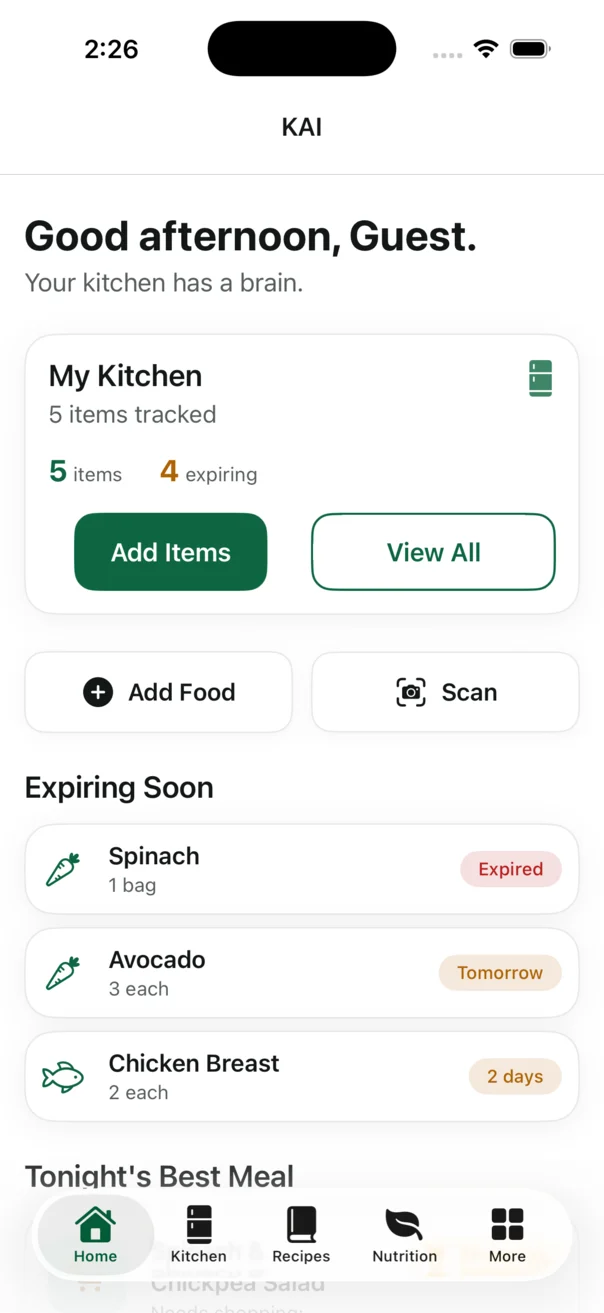
KAI keeps a live record of what is in your kitchen: items, quantities, freshness windows, and where things are stored. The point is not more logging. The point is better decisions later.
The Kitchen Operating System
Know what to cook,
buy, and do next.
KAI is the Kitchen Operating System. It keeps track of what is in your kitchen, helps you decide what to cook, turns intention into a better shopping list, and supports the act of cooking itself. Local-first. Private by default.
Built around the real state of your kitchen, not guesses dressed up as recommendations.
What KAI helps you do
KAI is built around a simple sequence. Each answer depends on the one before it. Skip the first question and everything downstream becomes less reliable.
KAI keeps a live record of what is in your kitchen: items, quantities, freshness windows, and where things are stored. The point is not more logging. The point is better decisions later.
Suggestions begin with what actually exists. From there, KAI can weigh what is expiring, how much time you have, what your household will actually eat, and what keeps the week working.
A useful shopping list is the difference between what you have and what you intend to make. KAI is designed to turn kitchen state into cleaner, lower-waste buying decisions.
Cooking guidance should meet the cook where they are. KAI is built to support execution with enough context, enough flexibility, and enough explanation to make the next decision easier than the last.
Why KAI is different
The hard part of dinner usually happens before cooking starts: what is already here, what needs to be used, what is missing, what matters tonight, and what should not be bought twice. KAI starts there.
Trust
Trust is not a brand polish layer added after the product. It is part of how KAI is designed, how it is explained, and how it can become a business without becoming dishonest.
Core usefulness should not begin with broad default data exposure. A household should not have to surrender a detailed kitchen record just to get basic value from the system.
The kitchen state belongs with the kitchen. KAI is being designed so that core logic can remain useful without making a remote system the mandatory center of every decision.
If something is partner-supported, chef-authored, or AI-assisted, users should be able to tell. Provenance should be visible where decisions are made, not hidden in disclaimers.
No invented ratings. No placeholder testimonials presented as real. No implied partnership status that has not been earned.

Product vision
The first release does not need to be everything at once. It needs to answer the right questions well. If KAI can keep a dependable record of the kitchen and help households act on it with more confidence, the foundation is doing its job.
Private beta
The private beta exists for invitation handling, tester guidance, support, and beta-specific expectations. The public site remains the durable business and trust surface.
Get KAI
KAI is being built to make the kitchen more legible, more useful, and more trustworthy over time. Start with the product, the trust model, or the waitlist.